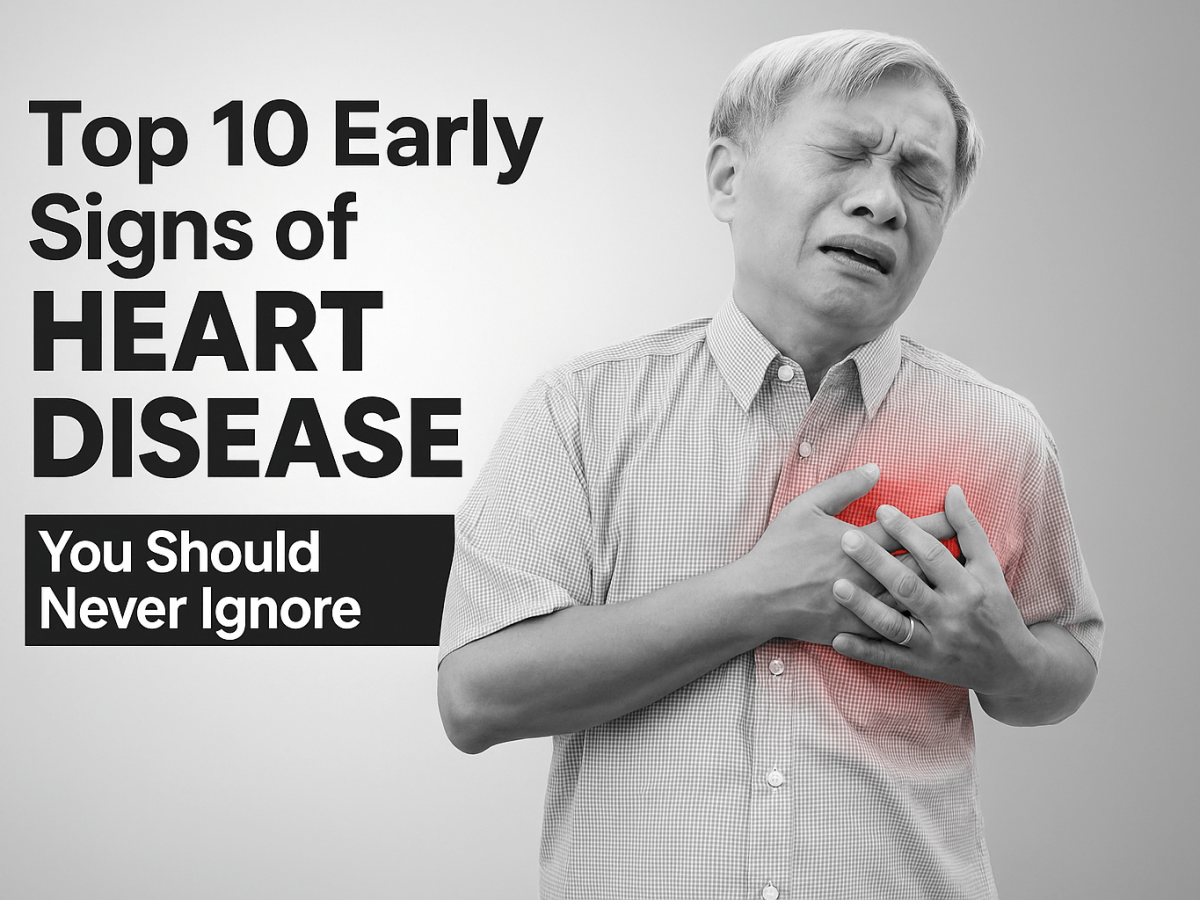
Heart disease is one of the leading causes of death worldwide, but many serious heart conditions can be prevented or treated successfully when detected early. Unfortunately, people often ignore subtle warning signs, assuming they are caused by stress, aging, or fatigue.
Recognizing these symptoms and seeking timely medical attention can significantly reduce the risk of complications such as heart attacks, heart failure, or stroke.
In this article, we’ll discuss the 10 early signs of heart disease, their possible causes, risk factors, diagnosis, and preventive measures to help you maintain a healthy heart.
What Is Heart Disease?
Heart disease refers to a group of conditions that affect the heart and blood vessels. These include:
- Coronary artery disease
- Heart failure
- Heart valve disease
- Arrhythmias (irregular heartbeat)
- Congenital heart defects
- Cardiomyopathy
Many heart diseases develop gradually over time and may not show obvious symptoms until they become severe. That’s why paying attention to early warning signs is essential.
1. Chest Pain or Discomfort
Chest pain is one of the most recognized symptoms of heart disease.
You may experience:
- Pressure in the chest
- Tightness
- Burning sensation
- Heaviness
- Squeezing pain
The discomfort may last for a few minutes or come and go. It can occur during physical activity, emotional stress, or even while resting.
Never ignore chest pain, especially if it spreads to the shoulders, neck, jaw, or arms.
2. Shortness of Breath
Feeling breathless after minimal activity or while lying down could indicate that your heart isn’t pumping blood efficiently.
This symptom often occurs because fluid builds up in the lungs due to reduced heart function.
You should consult a doctor if you notice:
- Difficulty climbing stairs
- Breathlessness while walking
- Waking up at night gasping for air
- Shortness of breath during routine activities
3. Unusual Fatigue
Feeling tired after a busy day is normal, but persistent and unexplained fatigue may be an early sign of heart disease.
Many people—especially women—experience extreme fatigue weeks before a heart attack.
Warning signs include:
- Feeling exhausted after simple tasks
- Low energy throughout the day
- Difficulty concentrating
- Needing frequent rest
4. Pain in the Neck, Jaw, Shoulder, or Arm
Heart-related pain doesn’t always stay in the chest.
Pain may spread to:
- Left arm
- Both shoulders
- Neck
- Jaw
- Upper back
This occurs because the nerves connected to the heart also supply these areas.
If this pain occurs suddenly along with chest discomfort or sweating, seek emergency medical care immediately.
5. Irregular Heartbeat
Everyone experiences occasional skipped heartbeats, but frequent or persistent irregular heart rhythms may indicate an underlying heart condition.
Symptoms include:
- Heart racing
- Fluttering sensation
- Skipped beats
- Rapid heartbeat
- Slow heartbeat
Some irregular heart rhythms increase the risk of stroke and heart failure if left untreated.
6. Swelling in the Legs, Feet, or Ankles
When the heart cannot pump blood effectively, fluid begins accumulating in the lower body.
This can cause swelling in:
- Feet
- Ankles
- Legs
Other symptoms may include:
- Tight shoes
- Puffy ankles
- Sudden weight gain
- Difficulty walking comfortably
7. Persistent Dizziness or Fainting
A sudden drop in blood flow to the brain may cause:
- Dizziness
- Lightheadedness
- Fainting
- Loss of balance
These symptoms can occur due to abnormal heart rhythms or poor blood circulation and should never be ignored.
8. Excessive Sweating
Cold sweats without physical activity can sometimes indicate reduced blood flow to the heart.
Seek immediate medical attention if sweating occurs along with:
- Chest pain
- Nausea
- Shortness of breath
- Dizziness
9. Persistent Cough
A chronic cough producing white or pink mucus may indicate heart failure.
This happens because fluid backs up into the lungs.
While most coughs are caused by infections or allergies, persistent coughing combined with breathlessness should be evaluated by a healthcare provider.
10. Nausea, Indigestion, or Stomach Discomfort
Some people mistake heart attack symptoms for acidity or indigestion.
Warning signs include:
- Upper abdominal discomfort
- Heartburn-like sensation
- Nausea
- Vomiting
- Feeling unusually full
Women are more likely than men to experience these symptoms during heart problems.
Who Is at Higher Risk?
Certain factors increase the likelihood of developing heart disease:
- High blood pressure
- High cholesterol
- Diabetes
- Smoking
- Obesity
- Lack of physical activity
- Excessive alcohol consumption
- Chronic stress
- Family history of heart disease
- Age above 45 years in men and above 55 years in women
If you have multiple risk factors, regular health checkups become even more important.
How Is Heart Disease Diagnosed?
Doctors may recommend several tests depending on your symptoms:
- Blood pressure measurement
- Electrocardiogram (ECG)
- Echocardiogram
- Treadmill stress test
- Blood tests
- CT coronary angiography
- Coronary angiogram
- Holter monitoring
Early diagnosis allows treatment before complications occur.
How Can You Prevent Heart Disease?
Simple lifestyle changes can dramatically reduce your risk.
Eat a Heart-Healthy Diet
Choose:
- Fresh fruits
- Vegetables
- Whole grains
- Lean proteins
- Healthy fats
- Nuts and seeds
Limit:
- Fried foods
- Sugary beverages
- Excess salt
- Processed foods
Exercise Regularly
Aim for at least 150 minutes of moderate physical activity every week.
Walking, cycling, swimming, or yoga can all help improve cardiovascular health.
Quit Smoking
Smoking damages blood vessels and significantly increases the risk of heart attack and stroke.
Quitting smoking provides immediate and long-term benefits for heart health.
Maintain a Healthy Weight
Being overweight forces the heart to work harder.
A balanced diet and regular exercise can help you maintain a healthy body weight.
Manage Stress
Practice:
- Meditation
- Deep breathing exercises
- Yoga
- Adequate sleep
- Time management
Reducing stress benefits both mental and cardiovascular health.
Get Regular Health Checkups
Routine screenings can detect conditions like:
- High blood pressure
- Diabetes
- High cholesterol
Treating these conditions early helps prevent serious heart problems.
When Should You See a Doctor?
Seek immediate medical attention if you experience:
- Severe chest pain
- Pain spreading to the arm or jaw
- Sudden shortness of breath
- Loss of consciousness
- Persistent dizziness
- Cold sweats with chest discomfort
Prompt treatment can save lives and reduce long-term complications.